

Anatomischer Friedhof

Video aus der Reihe "Wissenswert"







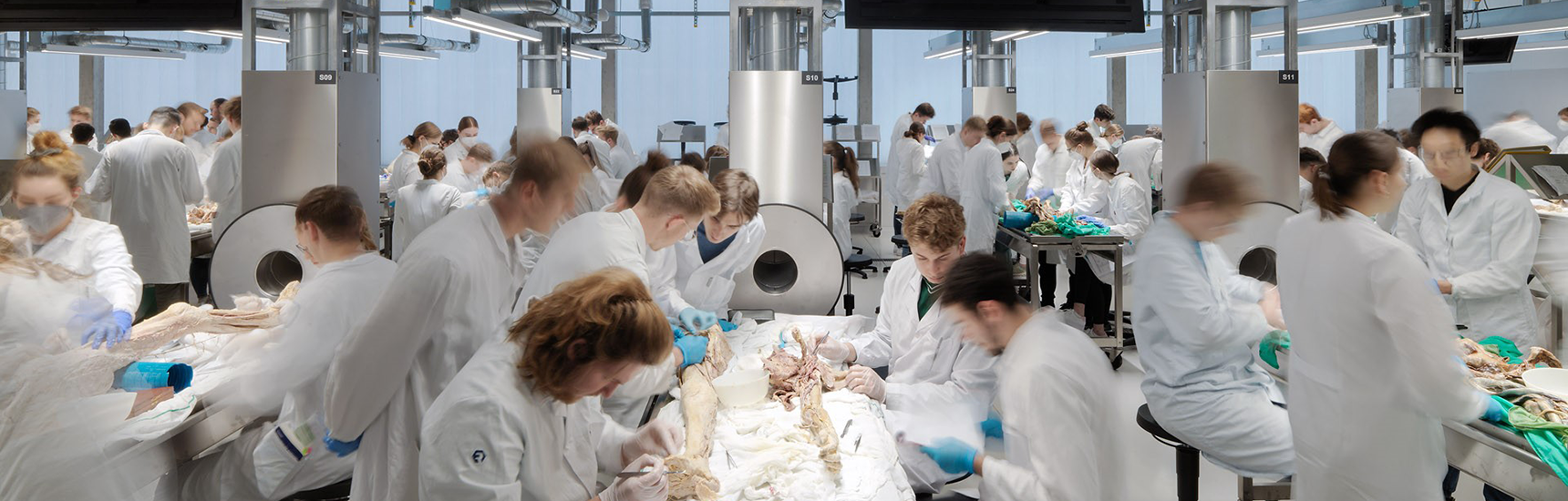
Every body donation is a gift to future generations of doctors and healthcare professionals.
This donation is a gift to future generations of doctors and health care professionals that will allow them to acquire important professional competencies through the study of anatomy. You also help surgeons to enhance and develop new operation techniques.
This can reduce complications caused by the actions of medical professionals. At the same time, intensive research on human specimens makes it possible to establish new treatment methods or increase understanding of diseases.

ACCEPTANCE OF BODY DONORS
Body donations are only accepted from persons with full legal capacity who have their main residence in Graz or in the surrounding area of Graz (within a radius of 50 km). The transfer of the body to our chair will be arranged by us after notification has been made and should take place no later than 48 hours post mortem of the donor.
Additional costs that arise, for example, due to an independently organized transfer, a transfer from abroad or from a place of death outside the 50 km radius, must be borne by the relatives of the donor.
IMPLEMENTATION
The donor must inform the next of kin or other confidants of his/her intention by handing over a copy of the signed agreement, so that all persons entrusted with the funeral are aware of the obligation to contact our chair.
COMPLETION OF STUDIES
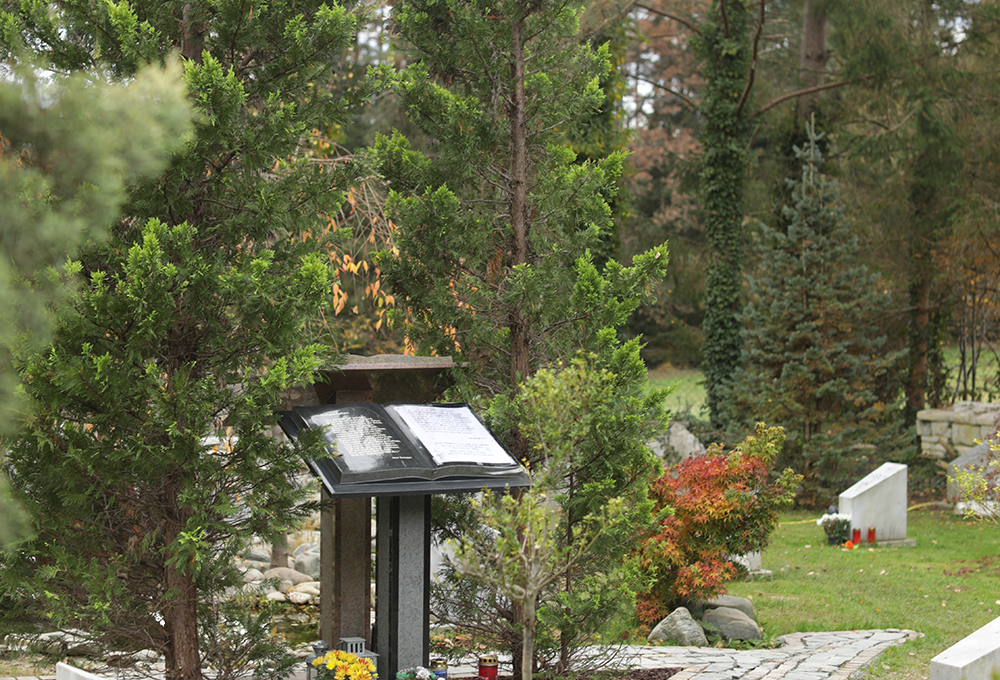
Until the burial, the body donor remains at the institute for about three years. The tissues of our body donors are cremated and then buried at the Tobelbad Forest Cemetery. The Medical University of Graz maintains two burial areas here as their final resting place. The area of the forest cemetery offers our donors and their relatives an appropriate place to pause and remember. However, due to the applicable General Data Protection Regulation (GDPR), there is no automatic notification of the surviving dependents by our division. The relatives must actively contact us again after a period of about two years after the death of the donor.
CONFIDENTIALITY AND DATA PROTECTION
The donor's personal data is subject to a duty of confidentiality and is processed in compliance with applicable data protection law. In general, donor data is only used for research and teaching in anonymized (non-personal) or pseudonymized (indirectly personal) form, so that it is not possible to draw conclusions about the donors' data.
COSTS
With the decision to donate the body, the anatomy becomes the provider and undertaker. Within the framework of the concluded contracts, the anatomy department thus assumes all associated tasks and costs such as transfer, coffin, cremation and burial.
With the conclusion of the contract, the body donors must pay a lump sum of EUR 1,400.00 into an account of the Medical University of Graz.
The lump sum for expenses must be transferred in full no later than six months after signing the agreement. If the death of the donor occurs before the lump sum is paid, the Division of Macroscopic and Clinical Anatomy can only accept, transfer, bury or use the body for research and teaching purposes if the outstanding amount is covered by the donor's relatives.
ID CARD FOR BODY DONORS
After payment of the lump sum for expenses, the donor will receive a body donor card from the Division of Macroscopic and Clinical Anatomy to carry it with them at all times, if possible. After their death, the donor card remains with the bereaved. If you lose your ID, please contact the secretariat of the Division of Macroscopic and Clinical Anatomy immediately. A fee of EUR 5.00 will be charged for replacement tickets. This fee is waived if a police loss or theft report is submitted.
THANKSGIVING AND COMMEMORATION
Once a year, the medical students organize a memorial service for the body donors together with the Division of Macroscopic and Clinical Anatomy, depending on the possibilities. The deceased are commemorated in speeches and musical contributions and their contribution to teaching and research in medicine is appreciated. The thank-you and commemoration ceremony is also explicitly addressed to the relatives of the body donors in order to engage in a festive exchange with the students and staff of Med Uni Graz. The event takes place in an ecumenical setting accompanied by the Protestant and Catholic churches and is aimed at relatives regardless of their faith.
The date of this annual thanksgiving and commemoration ceremony can be found on the homepage of the Division of Macroscopic and Clinical Anatomy at anatomie.medunigraz.at
WITHDRAWAL
The donor has the right to withdraw from the agreement at any time without giving reasons by means of a hand-signed letter to our chair. In this case, a processing fee of 25% of the paid contribution to expenses of EUR 1,400.00 (as of 2023) will be charged.
However, relatives do not have the right to withdraw after the death of the donor.
CONTACT
Contact person
Division of Macroscopic and Clinical Anatomy
Auenbruggerplatz 25, 1st floor
8036 Graz
Anatomy Donation Secretariat
Phone: +43 (0)316/385 71100
anatomie@medunigraz.at
Office hours:
Mon.–Thurs.: 8:00 AM – 15:00 PM and Fri. 08.00 AM – 12.00 PM
Body donations can only be accepted if there is a valid disposition at the Division of Macroscopic and Clinical Anatomy and the deceased can be used for research and teaching according to the purpose of the disposition. If the anatomy cannot fulfil the purpose of the will, the body donation will not be accepted. In this case, the funeral is to be paid for entirely from the estate of the deceased or their relatives.
The prerequisites for accepting a body donation ordered to Med Uni Graz's Division of Macroscopic and Clinical Anatomy are generally met if the donation reaches the anatomy department no later than 48 hours after the death and a valid death certificate of the body donor is available. The costs for this are to be borne by relatives or other institutions. The following exclusion criteria apply, which lead to the rejection of the will on the part of the anatomy:
Please note that the transfer of body donations by the undertakers requires a lead time, which may be delayed. can lead to an exceeding of the above-mentioned 48-hour window and a corresponding rejection by the anatomy. The Medical University of Graz does not cover any transfer, storage or other prosecture fees. If you have any questions, please feel free to contact us during office hours from Mon.–Thurs.: 8:00 AM – 15:00 PM and Fri. 08.00 AM – 12.00 PM
Until the burial, the body donor remains at the institute for about three years. The tissues of our body donors are cremated and then buried at the Tobelbad Forest Cemetery. The Medical University of Graz maintains two burial areas here as their final resting place. The area of the forest cemetery offers our donors and their relatives an appropriate place to pause and remember. However, due to the applicable General Data Protection Regulation (GDPR), there is no automatic notification of the surviving dependents by our chair. However, after a period of about two years after the death of the donor, the relatives can ask the division whether the funeral has already taken place.
Division of Macroscopic and Clinical Anatomy
Auenbruggerplatz 25
8036 Graz
Anatomy Donation Secretariat: Tel: +43 (0)316/385 71100, anatomie(at)medunigraz.at
Office hours: Mon.–Thurs.: 8:00 AM – 15:00 PM and Fri. 08.00 AM – 12.00 PM
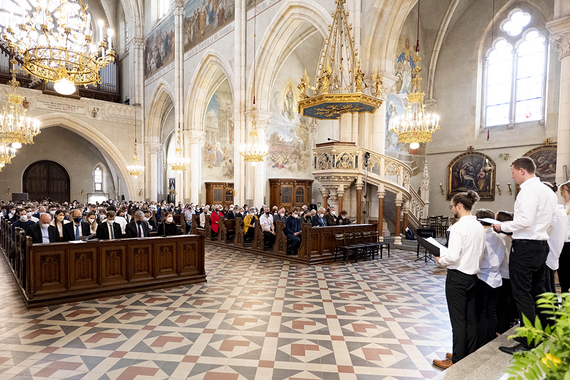
Once a year, the medical students organize a memorial service for the body donors together with the Chair of Macroscopic and Clinical Anatomy. The deceased are remembered in speeches and through musical contributions and their contribution to teaching and research in medicine is honored. The thank-you and memorial service is also explicitly aimed at the relatives of the body donors in order to come together with the students and staff of the Medical University of Graz for a festive exchange. The event takes place in an ecumenical setting under the guidance of the Protestant and Catholic churches and is aimed at relatives regardless of their faith.
The date of this annual thanksgiving and memorial service can be found on the homepage of the Chair of Macroscopic and Clinical Anatomy at anatomie.medunigraz.at